The Blood of Dawnwalker Gameplay Explained
The Blood of Dawnwalker gameplay explained: learn how Coen's day and night forms, directional combat, timed quests, choices, and exploration work.
What is The Blood of Dawnwalker gameplay like?
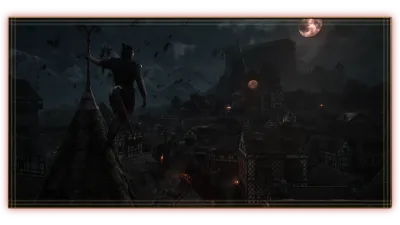
The Blood of Dawnwalker gameplay combines open-world exploration, directional combat, two form-dependent ability sets, and quests that move time forward. You play as Coen, a Dawnwalker who is human during the day and a vampire at night, so the available powers and routes can change with his form. The story responds to action and inaction, making the order in which you accept objectives part of the role-playing experience.
The game is a dark fantasy action RPG set in 14th-century Europe during a period of war, plague, and supernatural upheaval. Coen is trying to save his family, but the player can also pursue revenge, investigate ancient secrets, seek allies, or move toward danger without extensive preparation. Official descriptions frame these as connected choices rather than a single fixed sequence that every player must follow.
How do day and night change Coen’s abilities?
Day and night create two distinct gameplay loops instead of merely changing the lighting. Human Coen fights with a sword and can employ magic, while vampire Coen gains supernatural movement, claws, and other vampiric powers. Each form has stated strengths and weaknesses, so objectives may support different approaches depending on when and how the player tackles them.
The supplied material does not publish a complete ability list, final cooldown values, or exact resource costs for every power. It does show that changing form affects combat tools, movement, mysteries, and possible paths through an objective. Any claim that one form is universally stronger, or that a particular power is always the best choice, is To be confirmed.
How does combat work?
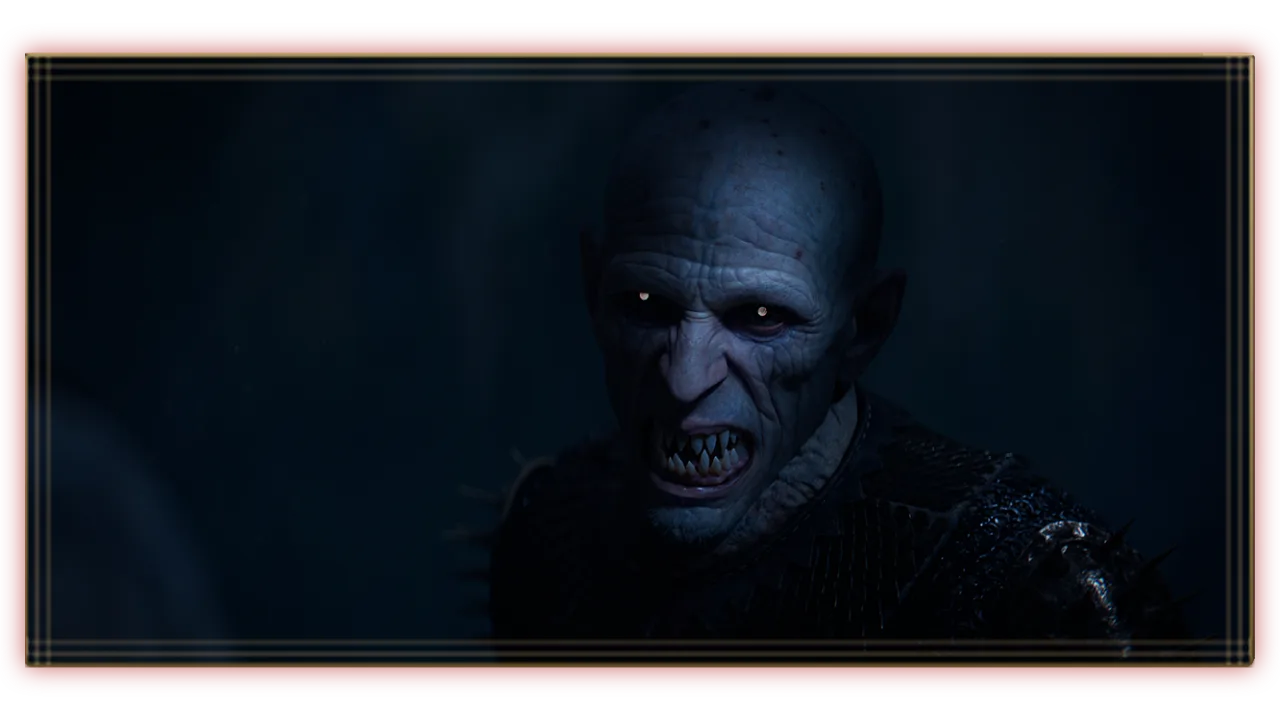
Combat uses a directional sword-fighting system in which attacks and defense are read through direction as well as timing. Official material describes swordplay, spells, and vampiric powers working together, while the collected combat information identifies upward, downward, left, and right attack directions. The system therefore asks the player to watch an opponent’s intent instead of treating every exchange as a single attack-button sequence.
Human and vampire combat retain the same broad directional foundation, but their supporting tools differ. Human Coen can combine sword attacks with magic, while vampire Coen can use claws and supernatural abilities alongside a sword. Final button mappings, exact parry windows, damage values, stamina costs, difficulty modifiers, and balance between the two forms are To be confirmed.
What does the quest footage show?
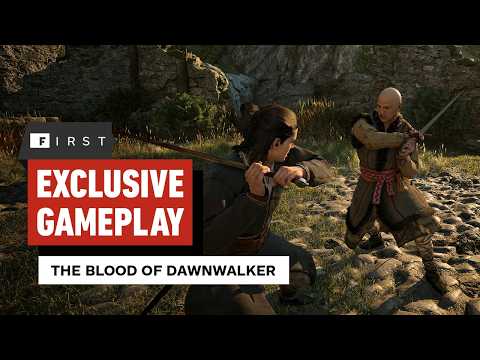
One collected gameplay video follows an underground search in which Coen examines footprints, remains, bite marks, tablets, and visual scenes connected to an older conflict. The sequence shows exploration, environmental observation, dialogue, and combat within the same objective rather than presenting every quest as continuous fighting. It also demonstrates that discoveries in the environment can provide the immediate context for what the player encounters next.
The footage should be treated as an example of quest structure, not a universal template for every mission. It confirms that the player can follow clues, inspect objects, speak with another character, and confront a threat, but it does not establish how many quests use that exact sequence. Puzzle frequency, investigation difficulty, alternative outcomes for this objective, and the final interface are To be confirmed.
Eight minutes of The Blood of Dawnwalker quest gameplay
How do choices and time affect quests?
Every time Coen takes on a quest, time moves forward while his family’s situation becomes more urgent. Official descriptions explicitly say that the player will not have time for everyone, which makes choosing whom to help and whom to leave behind part of the central system. Preparation can open opportunities, but spending time preparing is itself a decision with consequences.
Actions are not the only events that matter, because inaction can also shape the world. The player may focus on rescuing family, pursuing revenge, searching for secrets, or forming unlikely alliances, and the game is designed to react to those priorities. Exact time costs for individual quests, the final calendar interface, and the full consequences of missing an objective are To be confirmed unless the released game states them directly.
What can you do in the open world?
The hand-crafted world includes forests, plains, swamps, mountains, medieval settlements, forgotten ruins, and remnants of an ancient civilization. These locations support exploration as well as the game’s larger story about vampires emerging during a human crisis. The official overview presents the valley as a place where hidden truths, potential allies, and different routes toward a goal can be discovered.
A second collected gameplay sequence follows tracks from a roadside camp into a forest and then into an encounter involving a strange tooth-collecting creature and a group of bandits. The footage shows observation, conversation choices, movement through the environment, and a combat encounter inside a short quest. It confirms that smaller stories can begin through environmental signs, although the rewards, branching outcomes, and wider importance of that quest are To be confirmed.

The Blood of Dawnwalker Pearly and Precious quest gameplay
How much freedom does the story provide?
The confirmed premise gives the player several motivations without declaring one of them mandatory at every moment. Coen can work toward saving his family, seek revenge on the vampire responsible for his condition, investigate the valley, go alone, or look for allies. The official wording also allows the player to rush forward or spend valuable time preparing, reinforcing that the route through the story is intended to reflect personal priorities.
That freedom does not mean every claimed branch, ending, romance, or shortcut in preview commentary is established fact. The collected videos contain opinions and predictions about how far the non-linear structure might go, but those comments are not equivalent to a final game specification. The total number of endings, percentage of content visible in one playthrough, and exact conditions for major story outcomes are To be confirmed.
What should players understand before starting?
The most useful preparation is to view form, time, combat, and choice as connected systems. A quest may advance time, the current form may change the available tools, and the decision to help one person may mean leaving another objective unresolved. Watching the environment and reading the game’s own prompts will be more reliable than following an assumed universal route before the final mechanics can be tested.
Players should also separate confirmed systems from details seen only in pre-release footage. Directional combat, human and vampire gameplay loops, a time-moving quest structure, and a reactive open world are confirmed at a high level, while exact controls and balance remain unsettled. For a focused defensive explanation, continue with the parry guide, or review the PC requirements before release.
Which gameplay details are still unconfirmed?
Final control schemes, accessibility settings, performance modes, difficulty effects, ability values, quest time costs, and complete branching conditions are To be confirmed. Pre-release videos can show that a mechanic exists without proving its launch-day tuning or every rule behind it. This page therefore describes only the systems and examples present in the supplied material, without converting preview observations into invented numerical advice.
The same boundary applies to character builds and optimal strategies. No supplied source provides verified launch data for damage, cooldowns, level requirements, or a best skill order, so none is presented here. The article can be updated after those details appear in official documentation or can be reproduced in the released game.
Related Articles
guides
The Blood of Dawnwalker Beginner Guide
Start The Blood of Dawnwalker with a confirmed overview of Coen's forms, combat options, exploration, story choices, and the time-based quest system.
guides
How to Parry in Blood of Dawnwalker: Complete Guide
Learn how to parry in Blood of Dawnwalker using directional defense, attack indicators, timing, stamina awareness, camera choices, and confirmed combat rules.
guides
The Blood of Dawnwalker Trailer Guide and Videos
Watch The Blood of Dawnwalker trailer videos and learn what each official reveal confirms about Coen, Vale Sangora, combat, choices, and day-night gameplay.
Was this helpful?
Thanks for the feedback!